The High-Level Session on Women in Diplomacy and Multilateralism
Kampala, Uganda | 19 June 2026
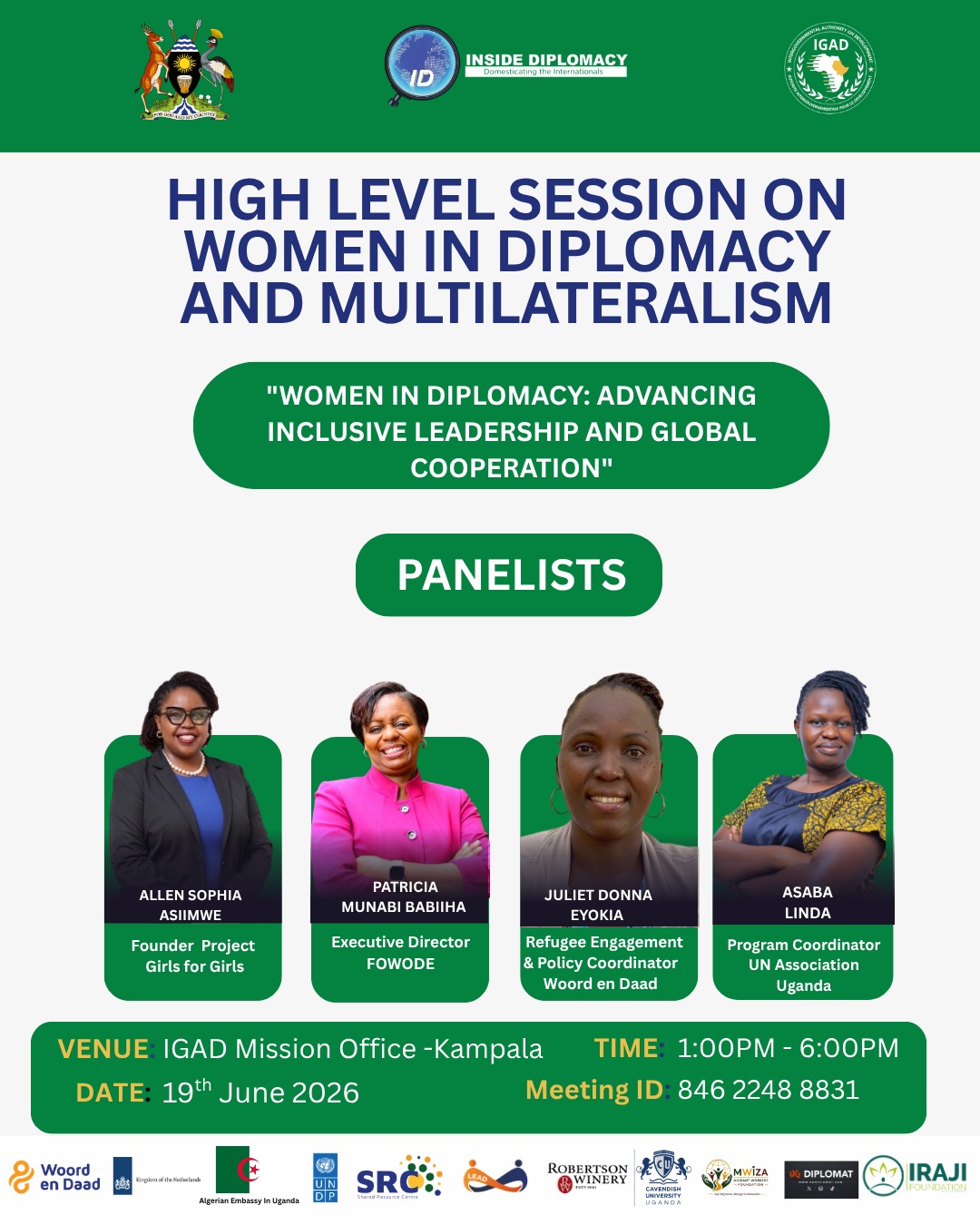
Hamiza Development Foundation (HDF) was honoured to participate in the High-Level Session on Women in Diplomacy and Multilateralism, a timely dialogue convened by Inside Diplomacy in partnership with the Intergovernmental Authority on Development (IGAD) under the theme:
"Women in Diplomacy: Advancing Inclusive Leadership and Global Cooperation."
Held at the IGAD Mission Office in Kampala, the high-level engagement brought together ambassadors, heads of diplomatic missions, representatives of international organisations, civil society leaders, development practitioners, academicians, and emerging young diplomats to examine the critical role women play in shaping diplomacy, peacebuilding, and multilateral cooperation.
The discussions reaffirmed that women must move beyond simply occupying seats at decision-making tables to actively influencing policies, shaping global agendas, and co-creating sustainable solutions that impact communities.
In her keynote remarks, H.E. Joselyn Bigirwa, Head of Mission at IGAD, challenged participants to redefine leadership beyond titles and positions.
She emphasized that:
• Leadership is rooted in service, accountability, and integrity.
• Women should never seek permission to lead but should confidently own their space in governance and diplomacy.
• Mentorship remains one of the strongest tools for preparing the next generation of women leaders.
• Inclusive leadership requires shared responsibility, with men actively supporting women through the "He for She" approach to promote stronger families, institutions, and societies.
The session also highlighted that diplomacy is not merely about representation—it is about influence, listening, collaboration, and creating policies that leave no one behind.
Participants benefited from insightful discussions led by an accomplished panel of women leaders from government, diplomatic agencies, civil society, international organisations, and academia
including:
• H.E. Fatima Fernandes Juarez- Ambassador of Bolivarian Republic of Venezuela to Uganda
• Dr. Edith Namutebi Nsubuga- Regional Peace and Security MoFA Uganda
• Allen Sophia Asiimwe – Founder, Project Girls for Girls
• Patricia Munabi Babiiha – Executive Director, Forum for Women in Democracy (FOWODE)
• Juliet Donna Eyokia – Refugee Engagement & Policy Coordinator, Woord en Daad
• Asaba Linda – Program Coordinator, United Nations Association Uganda
• Brig General Charity Bainagabo-Director Women Affairs-UPDF
• Ms. Bisharo ALI Hussein-Migration Governance & Policy Development-IOM
The broader dialogue also featured contributions from senior leaders including representatives from the Ministry of Foreign Affairs, the Uganda People's Defence Forces (UPDF), the International Organization for Migration (IOM), and members of the diplomatic corps.
Several important messages emerged throughout the discussions:
• Women's leadership is a strategic necessity for peace, development, and effective multilateral cooperation.
• Meaningful participation goes beyond presence—it requires influence, decision-making power, and accountability.
• Women must be recognised not only as beneficiaries of policy but as co-creators of solutions affecting their communities.
• Investing in women-led institutions strengthens governance, social cohesion, migration management, and sustainable development.
• Structural support systems, mentorship, and institutional reforms are essential to retaining and empowering women leaders across sectors.
For Hamiza Development Foundation, participating in this dialogue reaffirmed our commitment to promoting inclusive leadership, strengthening women's participation in governance, and supporting initiatives that amplify the voices of women and girls in decision-making spaces.
As an organisation committed to community development and social transformation, HDF believes that sustainable development can only be achieved when women are fully represented, empowered, and supported to lead at every level of society.
We remain committed to working alongside governments, development partners, civil society organisations, and communities to build a future where women's leadership is recognised not as an exception, but as an essential pillar of diplomacy, peacebuilding, and development.
The event was sponsored by Woord en Daad, Embassy of the Kingdom of the Netherlands, Embassy of Algeria in Uganda, United Nations Development Programme (UNDP), Shared Resource Centre (SRC), LEAD, Roberts & Winyen, Cavendish University Uganda, Mwiza Foundation, UG Diplomat and IRAJI Foundation.
Hamiza Development Foundation extends its appreciation to the organisers, partners, panelists, and all participants for creating an important platform that continues to inspire collaborative action towards more inclusive, equitable, and effective diplomacy.
Kampala, Uganda | 19 June 2026
Hamiza Development Foundation (HDF) was honoured to participate in the High-Level Session on Women in Diplomacy and Multilateralism, a timely dialogue convened by Inside Diplomacy in partnership with the Intergovernmental Authority on Development (IGAD) under the theme:
"Women in Diplomacy: Advancing Inclusive Leadership and Global Cooperation."
Held at the IGAD Mission Office in Kampala, the high-level engagement brought together ambassadors, heads of diplomatic missions, representatives of international organisations, civil society leaders, development practitioners, academicians, and emerging young diplomats to examine the critical role women play in shaping diplomacy, peacebuilding, and multilateral cooperation.
The discussions reaffirmed that women must move beyond simply occupying seats at decision-making tables to actively influencing policies, shaping global agendas, and co-creating sustainable solutions that impact communities.
In her keynote remarks, H.E. Joselyn Bigirwa, Head of Mission at IGAD, challenged participants to redefine leadership beyond titles and positions.
She emphasized that:
• Leadership is rooted in service, accountability, and integrity.
• Women should never seek permission to lead but should confidently own their space in governance and diplomacy.
• Mentorship remains one of the strongest tools for preparing the next generation of women leaders.
• Inclusive leadership requires shared responsibility, with men actively supporting women through the "He for She" approach to promote stronger families, institutions, and societies.
The session also highlighted that diplomacy is not merely about representation—it is about influence, listening, collaboration, and creating policies that leave no one behind.
Participants benefited from insightful discussions led by an accomplished panel of women leaders from government, diplomatic agencies, civil society, international organisations, and academia
including:
• H.E. Fatima Fernandes Juarez- Ambassador of Bolivarian Republic of Venezuela to Uganda
• Dr. Edith Namutebi Nsubuga- Regional Peace and Security MoFA Uganda
• Allen Sophia Asiimwe – Founder, Project Girls for Girls
• Patricia Munabi Babiiha – Executive Director, Forum for Women in Democracy (FOWODE)
• Juliet Donna Eyokia – Refugee Engagement & Policy Coordinator, Woord en Daad
• Asaba Linda – Program Coordinator, United Nations Association Uganda
• Brig General Charity Bainagabo-Director Women Affairs-UPDF
• Ms. Bisharo ALI Hussein-Migration Governance & Policy Development-IOM
The broader dialogue also featured contributions from senior leaders including representatives from the Ministry of Foreign Affairs, the Uganda People's Defence Forces (UPDF), the International Organization for Migration (IOM), and members of the diplomatic corps.
Several important messages emerged throughout the discussions:
• Women's leadership is a strategic necessity for peace, development, and effective multilateral cooperation.
• Meaningful participation goes beyond presence—it requires influence, decision-making power, and accountability.
• Women must be recognised not only as beneficiaries of policy but as co-creators of solutions affecting their communities.
• Investing in women-led institutions strengthens governance, social cohesion, migration management, and sustainable development.
• Structural support systems, mentorship, and institutional reforms are essential to retaining and empowering women leaders across sectors.
For Hamiza Development Foundation, participating in this dialogue reaffirmed our commitment to promoting inclusive leadership, strengthening women's participation in governance, and supporting initiatives that amplify the voices of women and girls in decision-making spaces.
As an organisation committed to community development and social transformation, HDF believes that sustainable development can only be achieved when women are fully represented, empowered, and supported to lead at every level of society.
We remain committed to working alongside governments, development partners, civil society organisations, and communities to build a future where women's leadership is recognised not as an exception, but as an essential pillar of diplomacy, peacebuilding, and development.
The event was sponsored by Woord en Daad, Embassy of the Kingdom of the Netherlands, Embassy of Algeria in Uganda, United Nations Development Programme (UNDP), Shared Resource Centre (SRC), LEAD, Roberts & Winyen, Cavendish University Uganda, Mwiza Foundation, UG Diplomat and IRAJI Foundation.
Hamiza Development Foundation extends its appreciation to the organisers, partners, panelists, and all participants for creating an important platform that continues to inspire collaborative action towards more inclusive, equitable, and effective diplomacy.
Gallery
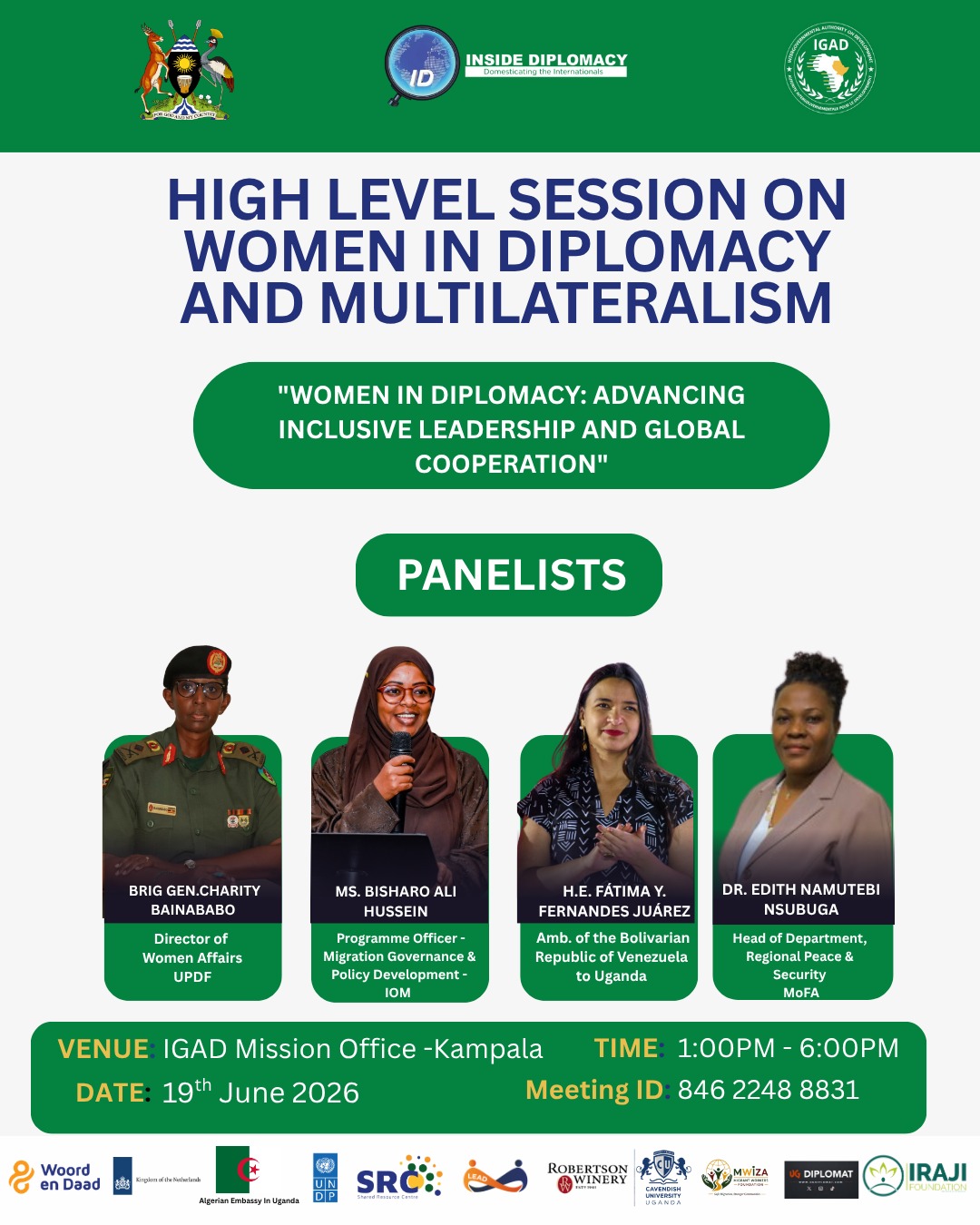
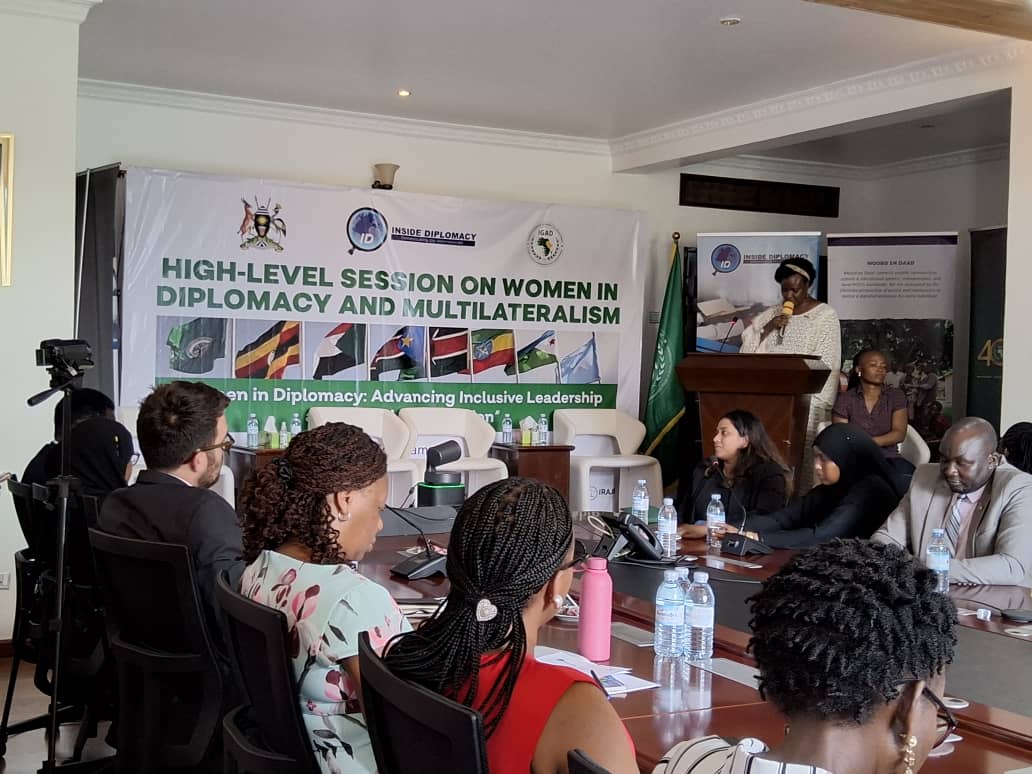
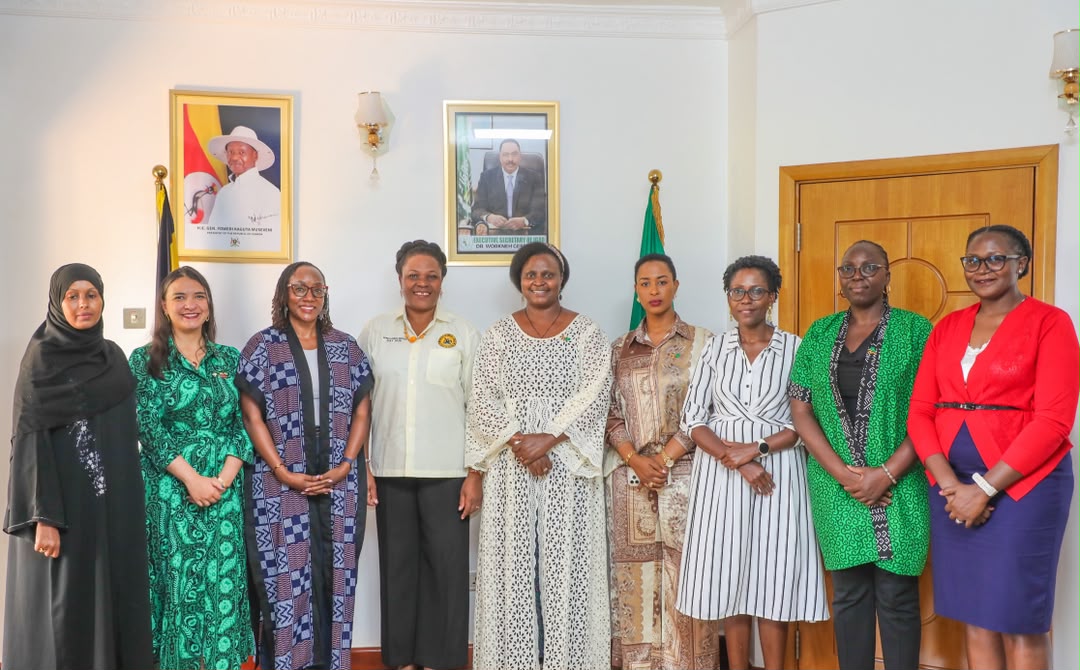
the High-Level Session on Women in Diplomacy and Multilateralism, convened by Inside Diplomacy and IGAD, bringing together the head of mission, Joselyn BIGIRWA, as well as diplomats, development practitioners, civil society leaders, and emerging young leaders to discuss the transformative role of women in shaping global cooperation and multilateral governance.